On October 25, 1900, Korea's highest government agency, the Uijeongbu (議政府), submitted for Korean Emperor Kojong's approval Imperial Edict No. 41, which would make the Korean island of Ulleungdo a county of Gangwon Province (江原道). The Korean emperor stamped his seal to the edict, and on October 27, the edict was announced in the Gwanbo (官報), the official newsletter of the Korean government. The relevant page of the October 27 newsletter is pictured on the left with the annoucement of Imperial Edict No. 41 (勅令第四十一號) outlined in red.
The edict changed the name of Ulleungdo (鬱陵島) to "Uldo" (鬱島) and made it a county of Gangwon Province (江原道). It also established the office of "County Magistrate" (郡守), who would be considered a "level 5" official in Korea's civil service system. The office of the county magistrate would be located on the island in the village of Taehadong (台霞洞), and the magistrate would have jurisdication over the whole island of Ulleungdo (鬱陵全島), Jukdo (竹島), and the "rock islets" (石島). The following is a translation of the first two articles of Imperial Edict No. 41:
Imperial Edict No. 41Koreans claims that the "seokdo" (石島) in the edict was a reference to Liancourt Rocks, which Koreans call "Dokdo" (獨島); however, Korea has no maps or documents to back up that claim. In fact, since there are no Korean maps showing Liancourt Rocks, it is very likely that Korean officials did not even know about Liancourt Rocks in 1900.
Renaming Ulleungdo as Uldo and Changing the Island's Administrator to County Magistrate
ARTICLE 1: Ulleungdo is renamed "Uldo" (鬱島) and is made a part of Gangwon Province (江原道). Island Administrator is changed to "County Magistrate" (郡守) and becomes a "level 5" (五等) offical in the civil service system (官制).
ARTICLE 2: The county office will be located at Taehadong (太霞洞), and will have jurisdiction over the whole island of Ulleungdo (鬱陵全島), Jukdo (竹島), and the rock islets (石島).
 A September 3, 1899 article (pictured on the left) in the Korean newspaper Hwangseong Sinmun (皇城新聞) described Ulleungdo as follows:
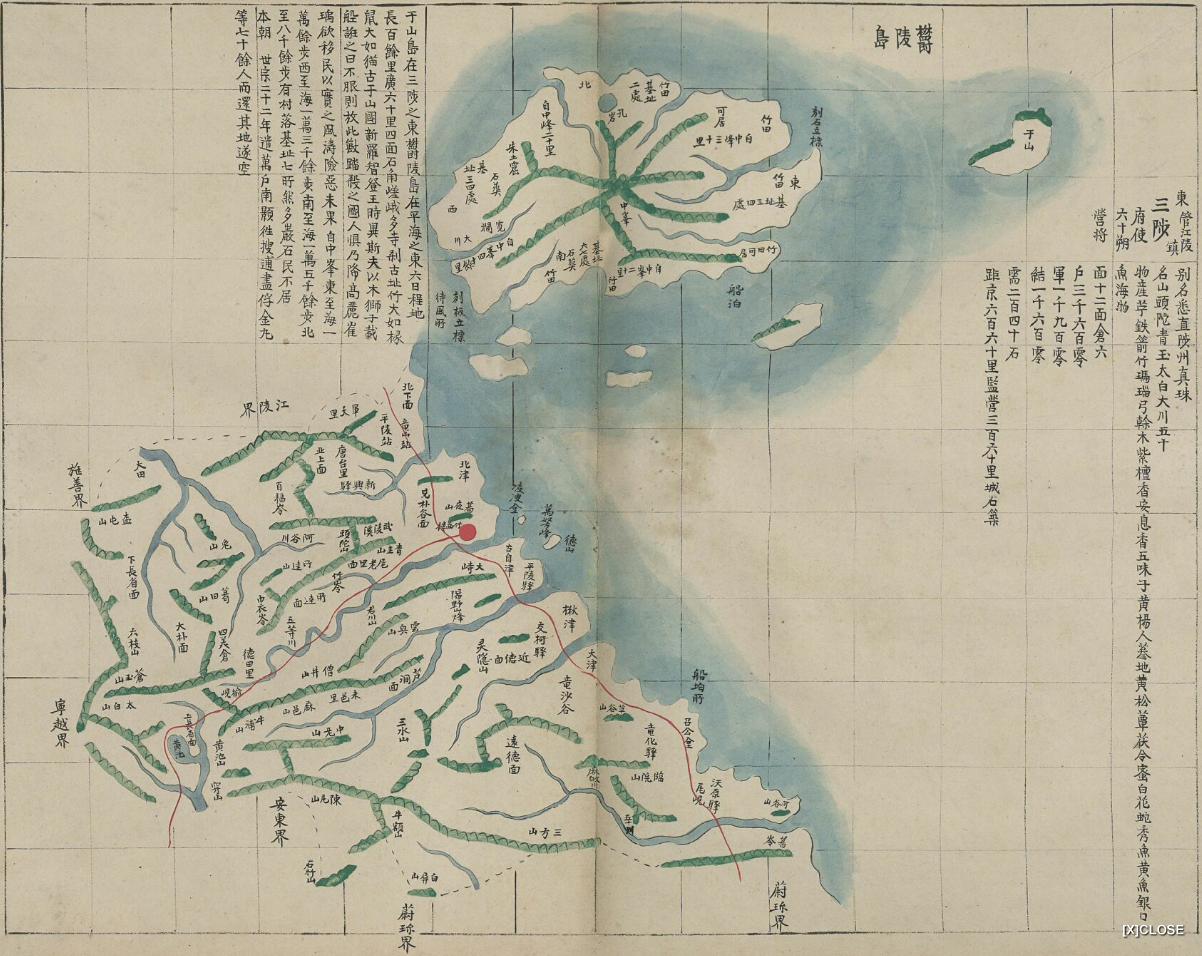
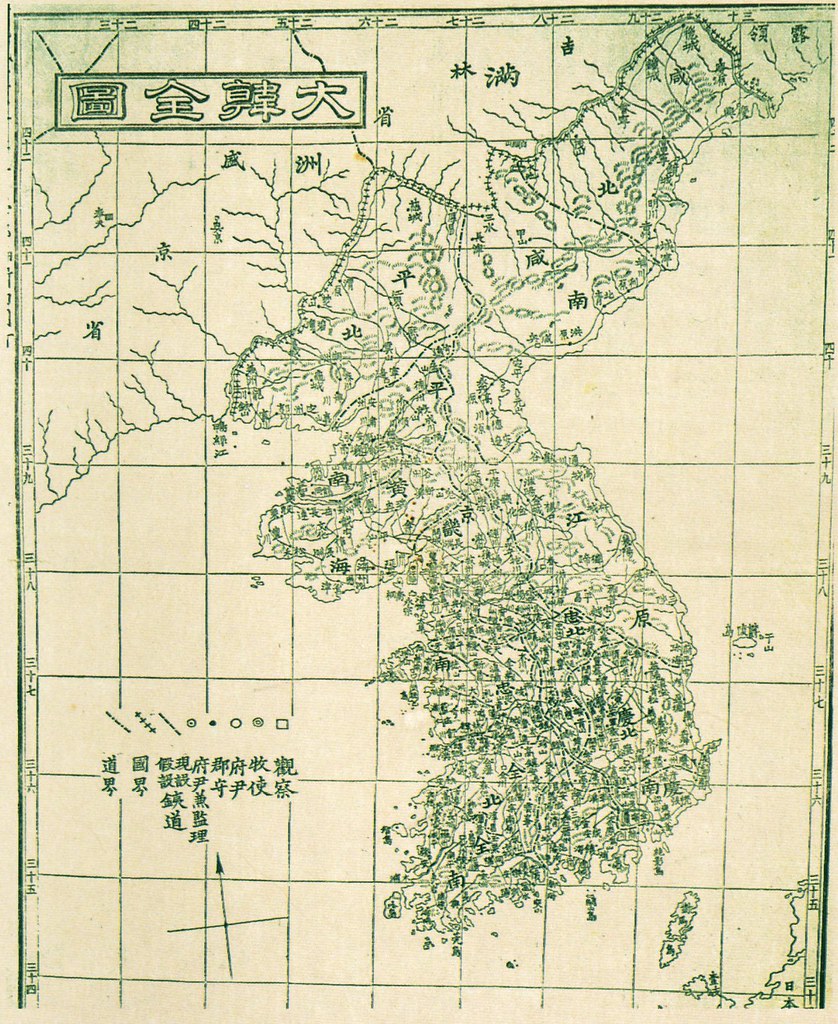
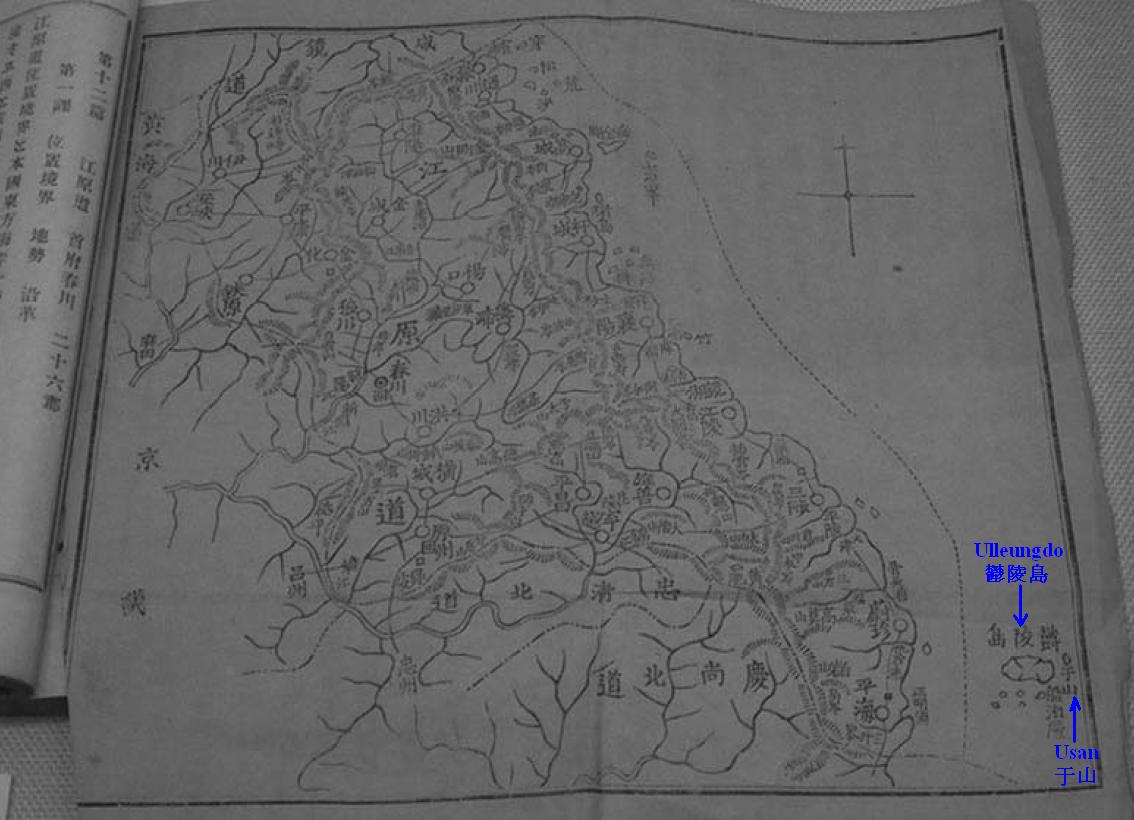
In the sea east of Uljin is an island named Ulleung. Of its six, small neighboring islands, Usando/Jukdo (于山島竹島) is the most prominent (崔著者). The Daehanjiji (大韓地誌) says that Ulleungdo is the old Country of Usan. It has an area of 100 ri. Three peaks stand out (律兀). Its products are siho (柴胡 - a variety of dropwort), gobon (藁本 - another variety of dropwort), seoknam (石楠 - kind of camphor), juniper (香木), zelkova (槻木), and nojuk (蘆竹 - a reed-like bamboo). The land is suitable for growing barley (宜麥). In the past, “water animals” (水獸) that looked like “cows without horns” (牛形無角) lived there and were called “gaji” (可之). There are also seabirds called "gwakjo" (霍鳥).Notice in the above article that Ulleungdo was described as having six, small neighboring islands, of which "Usando/Jukdo" (于山島竹島) was the most prominent. It is not known for sure how the reporter came to know that Ulleungdo had six neighboring islands, but since most Korean maps of Ulleungdo did show it with six neighboring islands, it is very likely that the reporter got his information from these maps. In fact, he even mentioned the Daehanjiji, which was a geography textbook that included a map very similar to the following 1898 map of Ulleungdo:

Notice that the map shows Ulleungdo (鬱陵島) with a small island off the east shore labeled as "于山" (Usan). It also shows five other islands off the southern shore of Ulleungdo, which were almost certainly a mapping error since most of Ulleungdo's "rock islets" (石島) are off Ulleungdo's northern shore. At any rate, the above map and many others show Ulleungdo having six, small neighboring islands with "Usan" island (于山島) being the most prominent. Usando was almost certainly an old name for Ulleungdo's neighboring island of Jukdo (竹島), which is about 2.2 kilometers off Ulleungdo's east shore. The 1899 newspaper article most likely used the phase "Usando/Jukdo" (于山島竹島) to show that two names were used to refer to the same island.
The 1899 newspaper article also talked about sea animals (水獸) that looked like "cows without horns" (牛形無角) and were called "gaji" (可之), which was a Korean name for "sea lion." The article said that sea lions "used to" (古에) live on Ulleungdo, which means they were no longer living on Ulleungdo at the time. That fact would eliminate the possibility that one of the neighboring islands referred to in the article was Liancourt Rocks (Dokdo / Takeshima) since sea lions were still living and breeding on Liancourt Rocks at the time.
The 1900 imperial edict mentioned Ulleungdo, Jukdo, and "seokdo" (石島), but it did not mention "Usando" (于山島), even though "Usando/Jukdo" was mentioned as Ulleungdo's most prominent neighboring island in the 1899 Hwangseong Sinmun article. This is more evidence that Usando was just an alternate name for Jukdo. The Korean government obviously decided to make "Jukdo" the official name of Ulleungdo's neighboring island, even though "Usando" was written before "Jukdo" in the 1899 article, and even though most of Korea's old maps used the name "Usando" instead of "Jukdo."
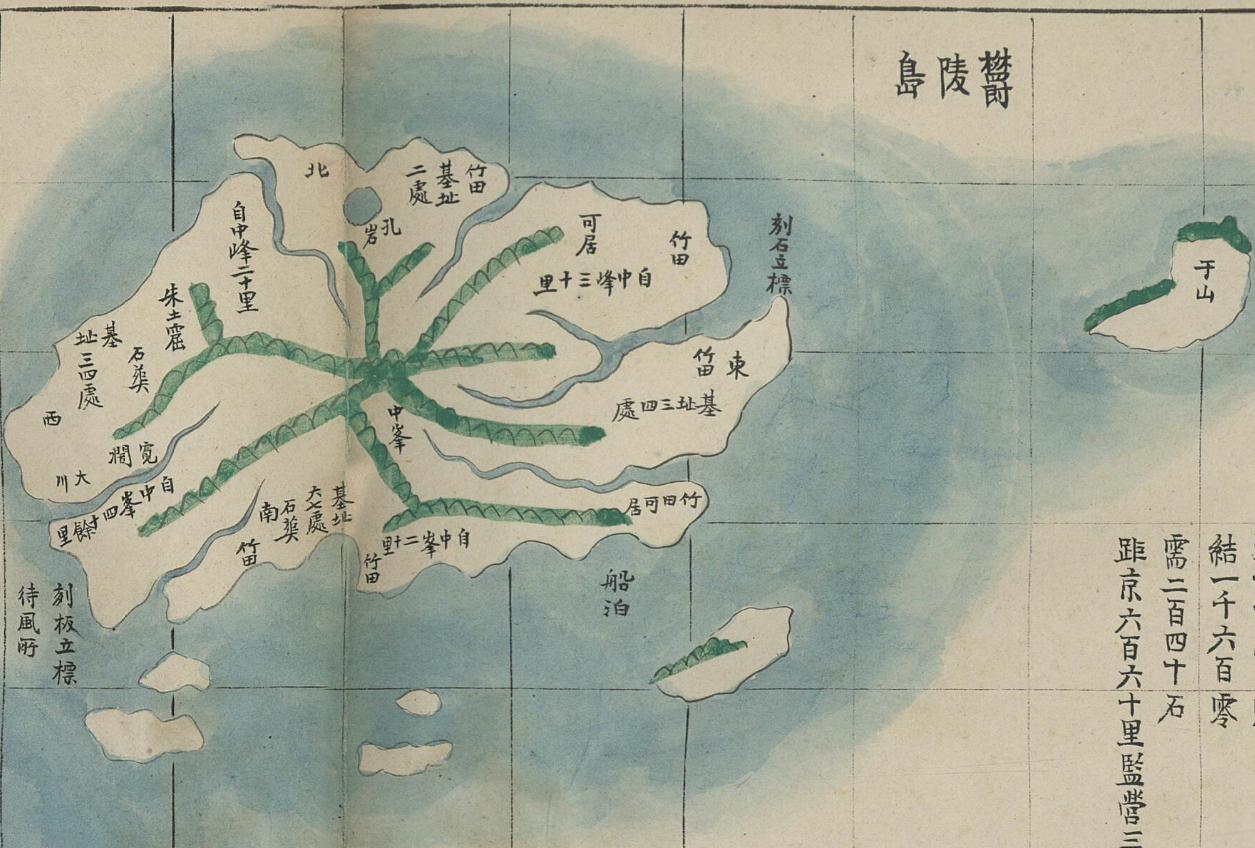
For example, consider the following Korean map of Ulleungdo, which was made sometime between 1884 and 1894. That means it was made after Koreans starting living on Ulleungdo. The map still showed an island off the east shore of Ulleungdo labeled as "Usan" (于山 - 우산) in a position that could only have been Ulleungdo's neighboring island of Jukdo (竹島 - 죽도). It even has a similar shape to Jukdo. Notice that the map also has the same five neighboring islands to the south.
As mentioned above, the Korean government claims that the "seokdo" (石島) mentioned in the 1900 imperial edict was a reference to Liancourt Rocks (Dokdo), but Korean officials do not have any maps or documents to back up that claim. Instead, they give an elaborate linguistic explanation of how the name "seokdo" (石島) evolved into "Dokdo" (獨島). However, since there are no maps that show Ulleungdo with an island named "Seokdo" (石島) and since the name was never mentioned again in any document referring to Uleungdo, the most likely explanation for "seokdo" (石島) is that it was a legal catchall phrase used to include Ulleungdo, Jukdo, and all the other "rock islets" (石島) around Ulleungdo under the jurisdiction of the Uldo (鬱島) County magistrate. That means that the other five neighboring islands mentioned in the 1899 Hwangseong Sinmun article would have been covered by the word "seokdo" (石島).
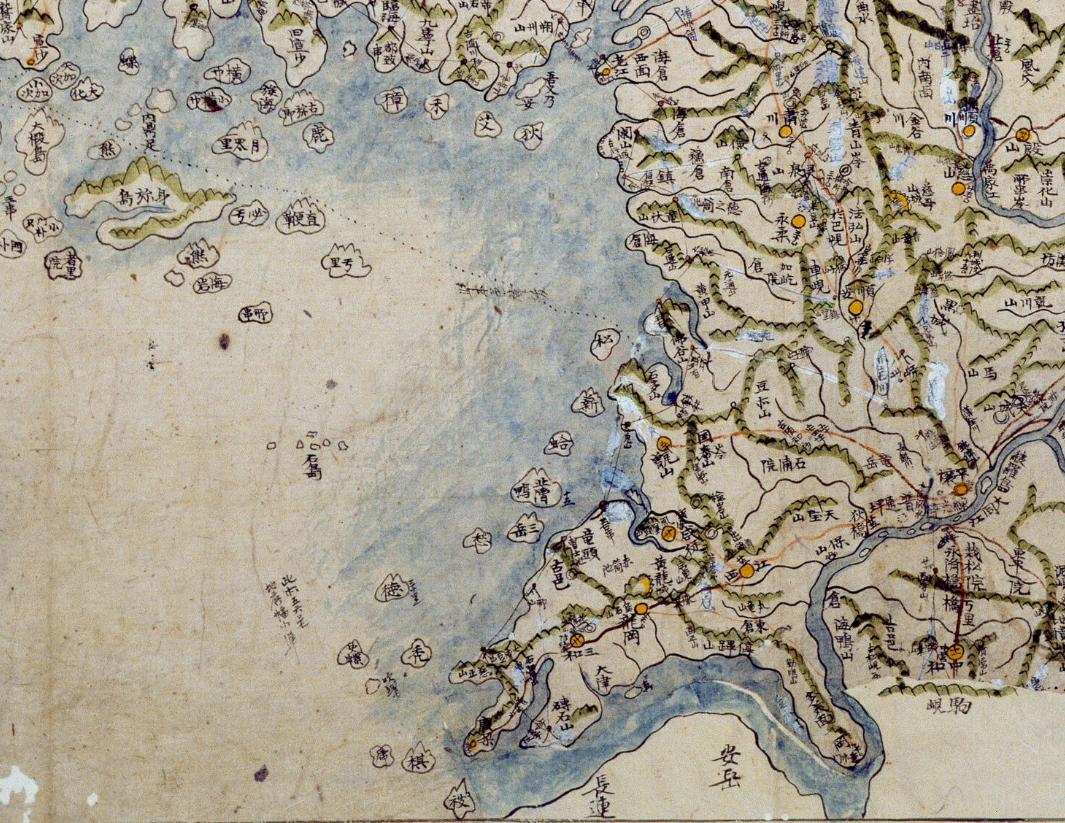
The following is a cutout from an old Korean map of Korea's Pyeongan Province (平安道), made sometime after 1776, that shows a small group of rocks in the sea labeled as 石島, which means "rock islets." This map is proof that the name "seokdo" (石島) was also used as a descriptive word to refer to "rock islets."